The University of Nottingham is delighted to invite applications for a 42-month, fully funded (U.K.) PhD studentship as part of the Leverhulme Trust Research Project Grant, “Lawn grass microbial fuel cells for widespread energy harvesting”. The interdisciplinary project, under the supervision of Dr. Michael P. Weir, Dr. Alison Tidy, and Dr. Helena I. Gomes, is joint between the School of Physics and Astronomy, the School of Biosciences and the Faculty of Engineering.
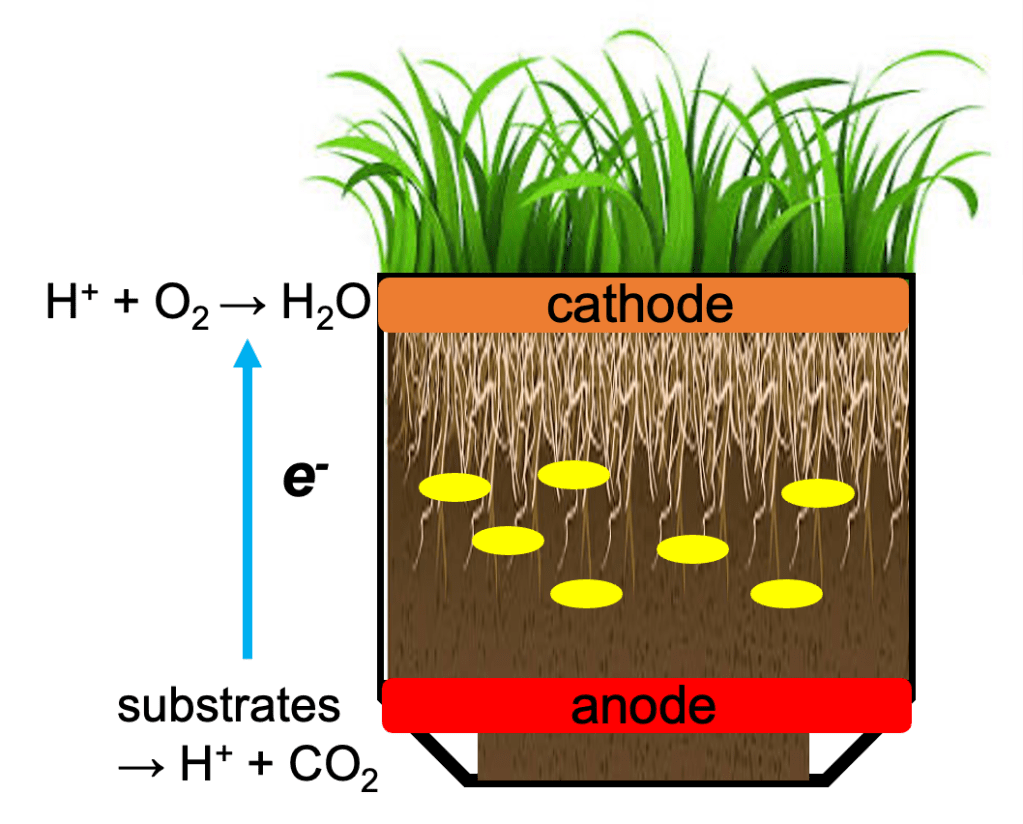
In an era where human-induced global warming is scientifically accepted as “unequivocal”, the switch to clean sources of electrical energy to displace fossil fuel burning has never been more urgent. Plant Microbial Fuel Cells (P-MFC) offer a promising route to generation of clean energy that is carbon negative and occurs in union with a living plant. P-MFC are also instrumental in the remediation of wastewater and in the removal of pollutants from soil. Should you be successful, you will be involved in the growth and development of the P-MFC, to establish a working prototype. You will investigate data collection and interfacing of the working design. You will study the effects of changing variables and their effect on the plant-MFC as a whole, understanding electrical output, as well as plant and microbial community health. You will then make a demonstrator model with an energy harvesting circuit to show a working prototype, for example, employing a light sensor and a low-powered LED light.
The studentship will teach a very wide range of interdisciplinary skills, including plant science, care of the living plant, study of the microbial colony in the root system, electrode function, data interfacing and analysis, electrochemistry, and simple electronics. The training from three different departments will give you an essential skillset in being able to engage with researchers from different disciplines, building team-working skills, and bringing together knowledge and skills towards a shared goal. You will also access training specific for biologists, physicists, and engineers (such as Python coding, Fiji and RStudio which all play an important role in the collection and analysis of results from the different disciplines), as well as speciality skills in bioelectrochemistry and statistics. The broad development potential of this training package will allow you to leave your PhD with a unique skill set, opening opportunities for your future career and giving you a strong advantage.
In addition to these specific scientific skills, the unique training environment at the University of Nottingham will help you to develop stronger team working skills, critical thinking, time management, and record keeping. You have the opportunity to participate in scholarly exchange with a vibrant, interdisciplinary cohort of fellow PhD researchers.
For informal enquiries about the role please contact Dr. Michael P. Weir (Physics) (Michael.Weir@nottingham.ac.uk), Dr. Alison Tidy (Biosciences/Plant Sciences) (Alison.Tidy@nottingham.ac.uk) or Dr. Helena I. Gomes (Engineering) (Helena.Gomes1@nottingham.ac.uk).
To apply for this PhD opportunity, please submit the following documents to Michael.Weir@nottingham.ac.uk by Monday 8th January 2024:
- Cover letter outlining your research interests and motivation to pursue this project.
- Curriculum vitae (CV) detailing your academic background, research experience, and relevant skills.
- Academic transcripts of your previous degrees.
- Contact information for two professional references.
Shortlisted candidates will be invited for an interview. Applications will be evaluated on a rolling basis until a suitable candidate is appointed.
Due to funding constraints, this project is only open to applicants with home (U.K.) fees status.
 Dr. Michael P. Weir