Frontiers Links 2025

In this post you will find a list of links from my guest lecture in the Frontiers in Physics module from October 2025.

Sir David Mackay’s (free) book: http://withouthotair.com

Hannah Ritchie’s book: https://www.nottheendoftheworld.co.uk/

Johan Rockström and Owen Gaffney’s book: https://www.dk.com/uk/book/9780241466759-breaking-boundaries/

IOP physics careers page, including sustainability careers: https://www.iop.org/careers-physics/your-future-with-physics/career-paths

Blog post on climate anxiety: https://mentalhealth-uk.org/blog/what-is-climate-anxiety-and-what-can-you-do-about-it/

News article on climate anxiety: https://www.bbc.co.uk/news/science-environment-63516055

Our World In Data: https://ourworldindata.org

The University’s sustainability pages: https://www.nottingham.ac.uk/sustainability

UoN reward scheme: https://uon.greenrewards.co.uk/

IPCC special report on climate change: https://www.ipcc.ch/report/sixth-assessment-report-cycle

The Keeling Curve, a daily record of global atmospheric carbon dioxide concentration: https://keelingcurve.ucsd.edu

British Antarctic Survey, Ice cores and climate change: https://www.bas.ac.uk/data/our-data/publication/ice-cores-and-climate-change/

Link to the Paris Agreement: https://www.un.org/en/climatechange/paris-agreement

The UN Sustainable Development Goals: https://sdgs.un.org/

Our World In Data – specific graphs used:

https://ourworldindata.org/grapher/temperature-anomaly

https://ourworldindata.org/grapher/per-capita-energy-use

https://ourworldindata.org/grapher/global-primary-energy

https://ourworldindata.org/grapher/modern-renewable-energy-consumption

https://ourworldindata.org/grapher/solar-pv-prices-vs-cumulative-capacity

Wiki pages on sustainable energy sources:

Chief Joseph Dam

Whitelee Windfarm

Crescent Dunes Solar Energy Facility

Ember Energy think-tank https://ember-energy.org/


Matthias Loster’s page on solar energy and land area has now sadly gone, but the link leads to a University page on the topic


NREL Best Research-Cell Efficiency Chart


Rao et al. Nature Reviews Materials (Harnessing singlet exciton fission to break the Shockley–Queisser limit)


European Chemical Society Periodic Table


Estimating the Global Waste Heat Potential (research paper)


Climate and Clean Air Coalition page on Hydrofluorocarbons

NASA page on radioisotope thermoelectric generators https://science.nasa.gov/planetary-science/programs/radioisotope-power-systems/power-radioisotope-thermoelectric-generators/
Frontiers talk links (2024)

In this post you will find a list of links from my guest lecture in the Frontiers in Physics module from October 2024.

Sir David Mackay’s (free) book: http://withouthotair.com

Hannah Ritchie’s book: https://www.nottheendoftheworld.co.uk/

Johan Rockström and Owen Gaffney’s book: https://www.dk.com/uk/book/9780241466759-breaking-boundaries/

IOP physics careers page, including sustainability careers: https://www.iop.org/careers-physics/your-future-with-physics/career-paths

Blog post on climate anxiety: https://mentalhealth-uk.org/blog/what-is-climate-anxiety-and-what-can-you-do-about-it/

News article on climate anxiety: https://www.bbc.co.uk/news/science-environment-63516055

Our World In Data: https://ourworldindata.org

The University’s sustainability pages: https://www.nottingham.ac.uk/sustainability

IPCC special report on climate change: https://www.ipcc.ch/report/sixth-assessment-report-cycle

The Keeling Curve, a daily record of global atmospheric carbon dioxide concentration: https://keelingcurve.ucsd.edu

British Antarctic Survey, Ice cores and climate change: https://www.bas.ac.uk/data/our-data/publication/ice-cores-and-climate-change/

Link to the Paris Agreement: https://www.un.org/en/climatechange/paris-agreement

The UN Sustainable Development Goals: https://sdgs.un.org/

Our World In Data – specific graphs used:

Wiki pages on sustainable energy sources:

Chief Joseph Dam

Whitelee Windfarm

Crescent Dunes Solar Energy Facility


Matthias Loster’s page on solar energy and land area


NREL Best Research-Cell Efficiency Chart


Rao et al. Nature Reviews Materials (Harnessing singlet exciton fission to break the Shockley–Queisser limit)


European Chemical Society Periodic Table


Estimating the Global Waste Heat Potential (research paper)


Climate and Clean Air Coalition page on Hydrofluorocarbons

EPSRC PhD studentship in energy harvesting – October 2024 start

Would you like to be involved in research that could uncover the next generation of sustainable energy harvesting materials? We invite applications to study for a PhD with us in the School of Physics and Astronomy, funded by the Engineering and Physical Sciences Research Council.

In particular, we are keen to attract students who are interested in soft materials and organic electronics, but also skilled in programming environments such as Python. We would like to develop high throughput, automated methods to investigate thermoelectric materials. These novel materials can convert waste heat into clean energy, or act as solid state heat pumps for sustainable heating and cooling.

You would be part of the Soft Matter Physics Group and the Interdisciplinary Transport Lab, where you would apply cutting edge techniques and gain a wide range of training and mentoring. We have strong links with the School of Chemistry and the Centre for Doctoral Training in Sustainable Chemistry, allowing you to be part of a wider network of enthusiastic researchers.

If this opportunity is of interest to you please contact me in the first instance at Michael.Weir@nottingham.ac.uk.

Leverhulme Trust PhD project: Lawn grass microbial fuel cells for widespread energy harvesting

The University of Nottingham is delighted to invite applications for a 42-month, fully funded (U.K.) PhD studentship as part of the Leverhulme Trust Research Project Grant, “Lawn grass microbial fuel cells for widespread energy harvesting”. The interdisciplinary project, under the supervision of Dr. Michael P. WeirDr. Alison Tidy, and Dr. Helena I. Gomes, is joint between the School of Physics and Astronomy, the School of Biosciences and the Faculty of Engineering

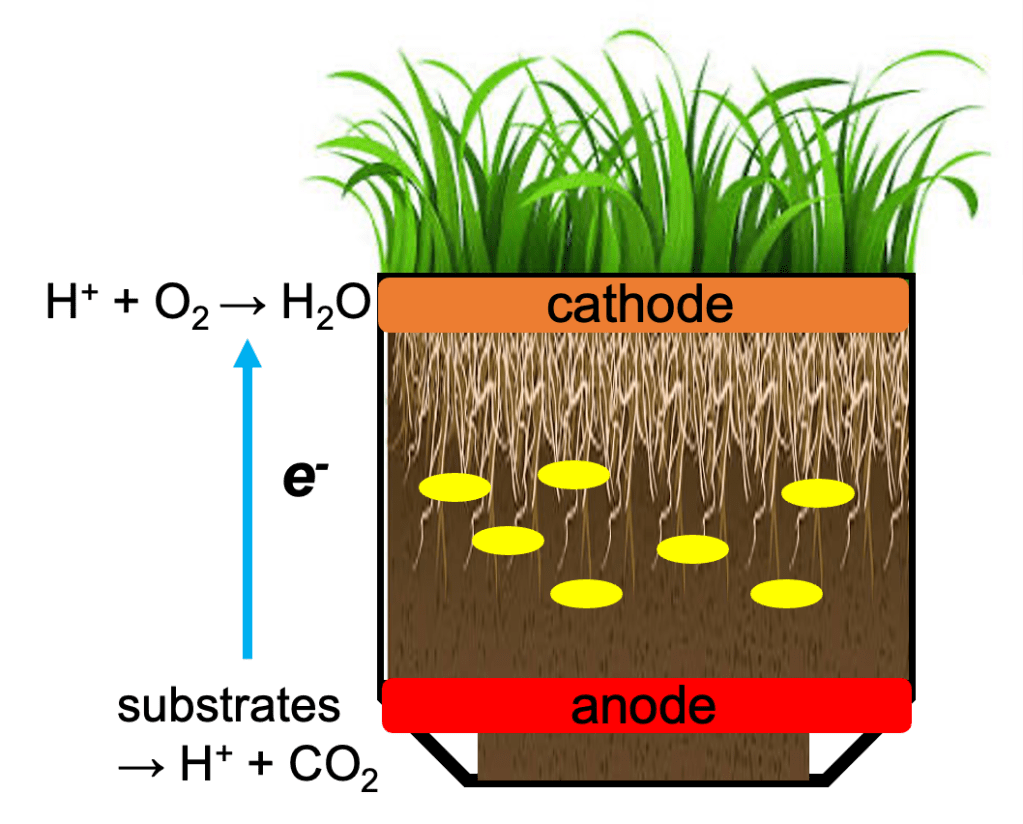
Schematic of a plant microbial fuel cell showing the locations of the plant, root system, bacteria, electrodes, and the resulting redox gradient

In an era where human-induced global warming is scientifically accepted as “unequivocal”, the switch to clean sources of electrical energy to displace fossil fuel burning has never been more urgent. Plant Microbial Fuel Cells (P-MFC) offer a promising route to generation of clean energy that is carbon negative and occurs in union with a living plant. P-MFC are also instrumental in the remediation of wastewater and in the removal of pollutants from soil. Should you be successful, you will be involved in the growth and development of the P-MFC, to establish a working prototype. You will investigate data collection and interfacing of the working design. You will study the effects of changing variables and their effect on the plant-MFC as a whole, understanding electrical output, as well as plant and microbial community health. You will then make a demonstrator model with an energy harvesting circuit to show a working prototype, for example, employing a light sensor and a low-powered LED light.

The studentship will teach a very wide range of interdisciplinary skills, including plant science, care of the living plant, study of the microbial colony in the root system, electrode function, data interfacing and analysis, electrochemistry, and simple electronics. The training from three different departments will give you an essential skillset in being able to engage with researchers from different disciplines, building team-working skills, and bringing together knowledge and skills towards a shared goal. You will also access training specific for biologists, physicists, and engineers (such as Python coding, Fiji and RStudio which all play an important role in the collection and analysis of results from the different disciplines), as well as speciality skills in bioelectrochemistry and statistics. The broad development potential of this training package will allow you to leave your PhD with a unique skill set, opening opportunities for your future career and giving you a strong advantage.

In addition to these specific scientific skills, the unique training environment at the University of Nottingham will help you to develop stronger team working skills, critical thinking, time management, and record keeping. You have the opportunity to participate in scholarly exchange with a vibrant, interdisciplinary cohort of fellow PhD researchers.

For informal enquiries about the role please contact Dr. Michael P. Weir (Physics) (Michael.Weir@nottingham.ac.uk), Dr. Alison Tidy (Biosciences/Plant Sciences) (Alison.Tidy@nottingham.ac.uk) or Dr. Helena I. Gomes (Engineering) (Helena.Gomes1@nottingham.ac.uk).

To apply for this PhD opportunity, please submit the following documents to Michael.Weir@nottingham.ac.uk by Monday 8th January 2024:

  • Cover letter outlining your research interests and motivation to pursue this project.
  • Curriculum vitae (CV) detailing your academic background, research experience, and relevant skills.
  • Academic transcripts of your previous degrees.
  • Contact information for two professional references.

Shortlisted candidates will be invited for an interview. Applications will be evaluated on a rolling basis until a suitable candidate is appointed.

Due to funding constraints, this project is only open to applicants with home (U.K.) fees status.

New role – Assistant Professor of Physics

Today (Friday 1st December) is my first day as an Assistant Professor of Physics, but I’ll be staying on familiar soil.

This day is at least 21 years in the making: I first set foot in the University of Nottingham’s School of Physics and Astronomy in 2002 to begin studying for an M. Sci. degree in Physics. In addition, I’ve spent the last three years back here as a Nottingham Research Fellow (NRF).

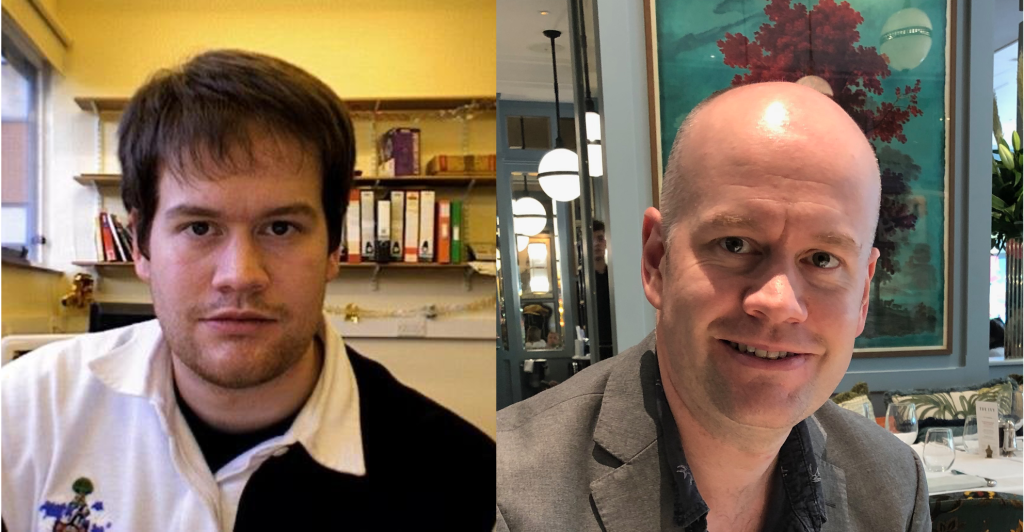
Pictures are actually 2006 (in Sheffield to be precise) and 2023…

I’m extremely grateful for the opportunities and privileges I’ve had throughout the years which have made this position possible. I’m also grateful to the University directly for the NRF which concluded yesterday (formally 31st August) and provided me with generous and flexible funding to execute a career pivot into the study of thermoelectric materials and devices whilst simultaneous growing new capabilities for the university.

In this role (which is equivalent to Lecturer) I’m hoping to continue my role with the School social media, which brings me into contact with interesting EDI and Outreach efforts. I’m also hoping to instigate new activity in the School relating to sustainability, in terms of teaching, research and working practice. 

To reach an open-ended academic position is rarely an easy ride and to anybody who is badly struggling on this path I would give double-edged advice. The first part is never to give up on what you dream of doing. The second part is not to fear allowing the dream to change.

Spin-Seebeck paper for Carl

We’re delighted for Dr. Carl (Yaoyang) Hu on the publication of his work on spin-Seebeck effect enhancements observed in platinum-yttrium iron garnet (Pt/YIG), where just a sprinkling (~2.5% coverage) of bismuth selenide nanoribbons increased the signal by ~700%!

https://doi.org/10.1063/5.0157778

This work from an EPSRC New Horizons grant with Prof Simon Woodward and Dr Oleg Makarovsky is in Applied Physics Letters and could help us find new materials to generate clean energy from wasted heat.

First paper for Zhongnan

Huge congratulations to PhD researcher Zhongnan Duan who has published her first research article this week in the Royal Society of Chemistry journal Materials Advances.

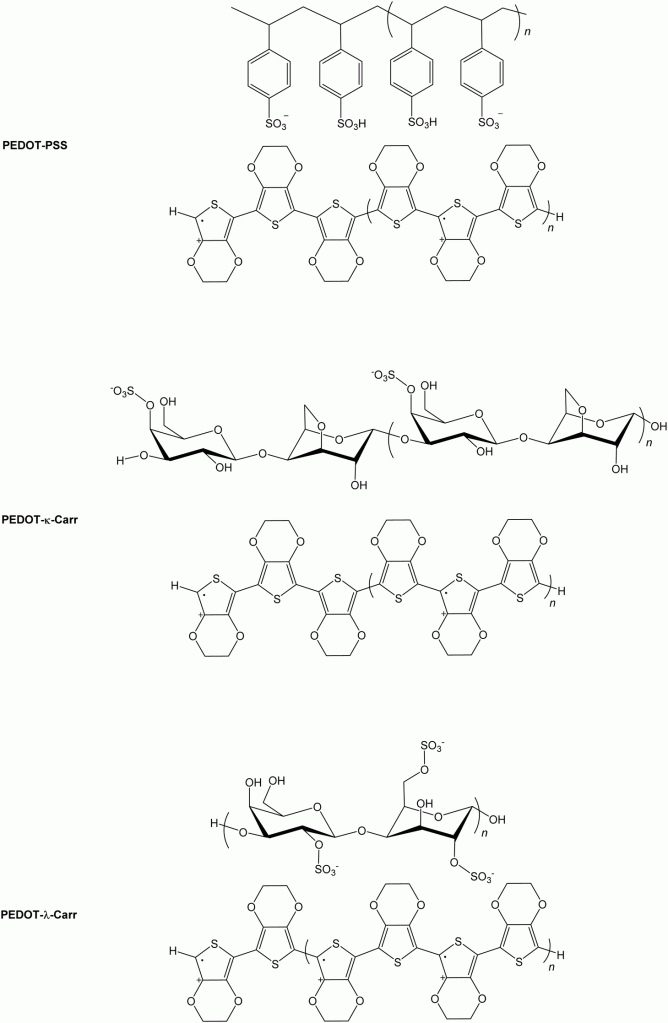
Zhongnan has been exploring the synthesis and applications of PEDOT:carrageenan, with the latter being a more sustainable replacement for the traditional PSS counterion. This work was carried out under the supervision of Prof David Amabilino who has since moved to the Institut de Ciència de Materials de Barcelona (CSIC).

I came late to the party to help with Zhongnan’s supervision but have been really impressed with her work and particularly her efforts in driving forward thin film thermoelectric characterisation methods at Nottingham. She has been a tireless user of the Interdisciplinary Transport Lab facility in Physics and Astronomy, impressively completing the full cycle of synthesis, characterisation, and electronic measurements. It is incredibly exciting as a physicist to have talented chemists willing to work with you! Credit to the full list of co-authors: Zhongnan Duan,  Joseph Phillips, Letizia Liirò-Peluso, Simon Woodward, Oleg Makarovsky, H. Jessica Pereira and David B. Amabilino.

To read the full paper visit: https://doi.org/10.1039/D3MA00547J

Congratulations Carl & my first thermoelectric article

https://link.springer.com/article/10.1007/s13391-023-00454-z

Friday 1st September was already a momentous day in my stay at Nottingham, marking three years since I first started as a Nottingham Research Fellow (NRF). However its real notable event was the open access publication of my colleague Dr. Carl (Yaoyang) Hu’s paper on a new class of soluble, printable thermoelectric ink under the direction of Prof Simon Woodward. This is the first publication where my NRF work on the measurement of thermoelectric materials properties has featured directly.

Graphical abstract for Hu et al, Electronic Materials Letters

I have good memories of Carl bringing me films of his new material to test out on my Seebeck measurement rig which was very new and very rudimentary at that time. Luckily, my experimental setup improved somewhat and Carl was one of the number of chemists who would come and use the Seebeck equipment independently in its current life as the Interdisciplinary Transport Lab. He has in fact gone on to do a whole, separate, two year postdoc and moved on to his own industrial position since then: this work did indeed spend a long time in peer review and revisions before finding a great home in Electronic Materials Letters.

Carl synthesised and developed a previously unseen material in the form of a ladder oligomer which was termed a “Ba(Ni-ett)” (ett = 1,1,2,2-ethenetetrathiolate)). Whilst its thermoelectric properties are modest at room temperature, it represents a unique step forward in the synthesis of n-type thermoelectric materials and will hopefully inspire further efforts in this area. It is soluble and inkjet printable (the work is a collaboration with Nottingham colleagues specialising in additive manufacturing) and so it represents an excellent template for versatile new thermoelectrics.

Well done Carl!

Research Records Podcast

I had the great honour earlier this summer of recording a podcast with Research Records and the resulting Episode 25 is out now. Styled as “the soundtrack to academic adventure”, the podcast invites guests from my former institution The University of Sheffield, and occasionally from further afield, to talk about their life in research using a handful of musical picks to provide a rich cultural background.

Research Records started its life as one of the many activities pioneered by the charity Inspiration for Life, which is now closing after ten successful years. For much of that time I was the Treasurer and a trustee of the charity, and so through that connection I was invited to tell my academic story – or at least the story so far, since normally esteemed Professors are invited to the show!

Please have a listen using the links below to either Spotify or Mixcloud.

Frontiers Talk links

Here are some links and embedded graphs from the Frontiers in Physics talk Materials for a Sustainable Future on 4th May 2023.

Motivation

Our World In Data : you can search for each graph title (& browse the site – it’s endless): see “Search for a topic or chart…”

What is Sustainability?

United Nations Sustainable Development Goals

Sustainable energy

Sir David J. C. MacKay’s FREE BOOK “Sustainable Energy: Without the Hot Air”

Chief Joseph Dam

Whitelee Windfarm

Crescent Dunes Solar Energy Facility

European Chemical Society Periodic Table

University of Nottingham ECMN Group

UoN Energy Institute

UoN Propulsion Futures Beacon

UoN Sustainability

Solar energy

Matthias Loster’s page on solar energy and land area

NREL Best Research-Cell Efficiency Chart

Rao et al. Nature Reviews Materials (Harnessing singlet exciton fission to break the Shockley–Queisser limit)

My (Mike Weir & colleagues’) research publications

Harvesting Light / Quantum Solar YouTube video (& projected on a building)

Harvesting Light project web page (Artist Paul Evans)

Thermoelectrics

Estimating the Global Waste Heat Potential (research paper)

Climate and Clean Air Coalition page on Hydrofluorocarbons

Journal of Applied Physics research paper on candidate thermoelectric materials

Summary

Great IoP physics careers page (lots on sustainability)

Climate anxiety news article (bbc.co.uk)

Climate anxiety advice blog post (Mental Health UK)